

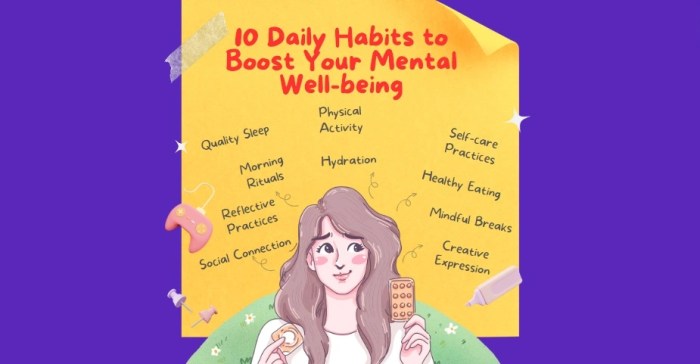
Embark on a journey to enhance your physical and mental well-being with these 10 daily habits. This guide will delve into the importance of consistent routines and their profound impact on overall health. Brace yourself for a transformative experience as we explore the realm of wellness together.
In the following paragraphs, we will uncover detailed insights into physical and mental habits, nutrition, quality sleep, stress management, social connections, time management, physical activity, and personal development for a holistic approach to wellness.
Importance of Daily Habits for Wellness
Establishing daily habits is crucial for boosting both physical and mental wellness as it provides a sense of structure, consistency, and stability in our lives. By incorporating positive routines into our daily lives, we can improve our overall well-being and build a foundation for long-term health benefits.
Consistent Exercise Routine
Engaging in regular physical activity, whether it's a daily workout, yoga session, or simply going for a walk, can have a significant impact on our physical and mental health. Exercise helps to improve cardiovascular health, boost mood by releasing endorphins, reduce stress levels, and enhance overall energy levels.
Healthy Eating Habits
Adopting nutritious eating habits on a daily basis can nourish our bodies and minds, providing us with the essential vitamins, minerals, and nutrients needed for optimal functioning. Consuming a balanced diet rich in fruits, vegetables, whole grains, and lean proteins can support our immune system, improve cognitive function, and prevent chronic diseases.
Mindfulness Practices
Incorporating mindfulness practices such as meditation, deep breathing exercises, or journaling into our daily routine can help reduce anxiety, enhance focus and concentration, and promote emotional well-being. These practices enable us to stay present in the moment, cultivate self-awareness, and manage stress more effectively.
Adequate Sleep Schedule
Prioritizing a consistent sleep schedule and ensuring an adequate amount of quality sleep each night is essential for physical and mental health. Quality sleep helps to regulate mood, improve cognitive function, support immune function, and enhance overall productivity and performance.
Physical Habits for Wellness
Maintaining physical wellness is crucial for overall health and vitality. Incorporating certain habits into your daily routine can significantly enhance your physical well-being.Regular Exercise:Engaging in regular physical activity is essential for maintaining a healthy body. Exercise helps to strengthen muscles, improve cardiovascular health, boost mood, and enhance overall well-being.
Aim for at least 30 minutes of moderate exercise most days of the week to reap the benefits.Balanced Diet:Eating a balanced diet rich in fruits, vegetables, lean proteins, and whole grains is key to supporting your physical health. Nutrient-dense foods provide the necessary vitamins and minerals to fuel your body and keep it functioning optimally.Adequate Sleep:Getting enough quality sleep is vital for physical recovery and overall health.
Aim for 7-9 hours of restful sleep each night to allow your body to repair and recharge. Poor sleep can lead to a variety of health issues, so prioritize a consistent sleep schedule.Staying Hydrated:Proper hydration is essential for maintaining bodily functions and promoting overall health.
Drinking an adequate amount of water each day helps to regulate body temperature, aid digestion, and flush out toxins. Carry a water bottle with you to ensure you stay hydrated throughout the day.Stretching and Mobility:Incorporating stretching and mobility exercises into your daily routine can help improve flexibility, prevent injury, and relieve muscle tension.
Spending a few minutes each day stretching can have a significant impact on your physical well-being.
Importance of Regular Exercise
Regular exercise is crucial for maintaining physical wellness as it offers a wide range of benefits for the body and mind. Exercise helps to improve cardiovascular health, strengthen muscles, boost metabolism, and enhance mood. Additionally, regular physical activity can reduce the risk of chronic diseases such as heart disease, diabetes, and obesity.
By incorporating exercise into your daily routine, you can improve your overall quality of life and longevity.
Benefits of Staying Hydrated
Staying hydrated is essential for overall health and well-being. Water plays a vital role in various bodily functions, including temperature regulation, nutrient transportation, and waste removal. By drinking an adequate amount of water each day, you can improve digestion, support kidney function, and maintain healthy skin.
Dehydration can lead to fatigue, headaches, and reduced physical performance, highlighting the importance of staying hydrated as a daily habit.
Mental Habits for Wellness
Developing good mental habits is essential for overall well-being. These habits not only help in managing stress but also promote a positive mindset and emotional balance.
Mindfulness Practices
Mindfulness practices involve being fully present in the moment, without judgment. This mental habit can significantly reduce anxiety, improve focus, and enhance self-awareness. Incorporating mindfulness techniques such as meditation, deep breathing exercises, or mindful walking into your daily routine can have a profound impact on your mental wellness.
Gratitude Journaling
Keeping a gratitude journal and writing down things you are thankful for each day can help shift your focus from negativity to positivity. This habit can increase feelings of happiness, contentment, and overall life satisfaction. Taking a few minutes every day to reflect on the good things in your life can improve your mental well-being.
Setting Boundaries
Setting healthy boundaries in your relationships and daily life is crucial for maintaining mental wellness. Learning to say no when necessary, prioritizing self-care, and establishing clear limits with others can help reduce stress, prevent burnout, and promote a sense of control over your life.
Engaging in Creative Activities
Engaging in creative activities such as painting, writing, or playing music can be therapeutic for your mental health. These activities allow you to express yourself, relieve stress, and tap into your inner creativity. Making time for creative pursuits in your daily routine can boost your mood and overall well-being.
Practicing Self-Compassion
Being kind and compassionate towards yourself is a crucial mental habit for wellness. Practicing self-compassion involves treating yourself with the same kindness and understanding that you would offer to a friend facing a difficult situation. This habit can help build resilience, improve self-esteem, and foster a positive self-image.
Nutrition and Diet
Maintaining a balanced diet is essential for optimal physical and mental wellness. The food we consume provides our bodies and minds with the necessary nutrients to function properly and stay healthy. Poor nutrition can lead to a variety of health issues, including obesity, heart disease, and mental health disorders.
Impact of Nutrition on Physical and Mental Health
Nutrition plays a crucial role in both physical and mental health. A diet rich in fruits, vegetables, whole grains, lean proteins, and healthy fats can help reduce the risk of chronic diseases, such as diabetes and cancer. Additionally, a well-balanced diet can improve mood, cognitive function, and overall well-being.
- Eating nutrient-dense foods provides the necessary vitamins and minerals for the body to function optimally.
- Avoiding processed foods high in sugar, unhealthy fats, and additives can help prevent inflammation and oxidative stress in the body.
- Hydrating with plenty of water throughout the day is essential for proper digestion, nutrient absorption, and overall health.
Creating Healthy Eating Habits and Meal Planning
Establishing healthy eating habits and meal planning can make it easier to maintain a balanced diet and support overall wellness.
- Plan your meals ahead of time to ensure you have nutritious options readily available.
- Include a variety of foods from all food groups to ensure you are getting a wide range of nutrients.
- Avoid skipping meals and aim for regular, balanced meals and snacks throughout the day.
- Practice mindful eating by paying attention to hunger cues and savoring each bite to promote healthy digestion.
Quality Sleep
Sleep is a fundamental aspect of overall wellness, impacting both physical and mental health. Quality sleep plays a crucial role in various bodily functions and cognitive processes, making it essential for maintaining well-being.
The Importance of Quality Sleep
- Quality sleep is necessary for the body to repair and rejuvenate itself, supporting physical health and immune function.
- During deep sleep stages, the brain consolidates memories, processes information, and regulates emotions, contributing to mental well-being.
- Poor sleep quality has been linked to an increased risk of chronic conditions such as obesity, heart disease, and depression.
- Establishing good sleep habits can improve focus, productivity, and overall quality of life.
Strategies for Improving Sleep Hygiene and Bedtime Routine
- Set a consistent sleep schedule, going to bed and waking up at the same time each day, even on weekends.
- Create a relaxing bedtime routine to signal to your body that it's time to wind down, such as reading a book or taking a warm bath.
- Avoid stimulants like caffeine and electronic devices close to bedtime, as they can interfere with falling asleep.
- Ensure your sleep environment is conducive to rest, with a comfortable mattress, pillows, and a cool, dark room.
The Connection Between Sleep and Mental Health
Quality sleep is closely linked to mental health, with insufficient sleep contributing to mood disorders, anxiety, and stress. Lack of sleep can impair cognitive function, decision-making, and emotional regulation, affecting overall mental well-being. Prioritizing quality sleep can help manage stress, improve mood, and enhance resilience in facing daily challenges.
Stress Management
Managing stress effectively on a daily basis is crucial for maintaining overall well-being. Chronic stress can have detrimental effects on both physical and mental health, leading to issues such as high blood pressure, weakened immune system, anxiety, and depression. Here are some techniques and tips for incorporating stress-relief practices into your daily life:
Techniques for Managing Stress
- Practice deep breathing exercises: Deep breathing can help reduce stress and promote relaxation. Take slow, deep breaths in through your nose and out through your mouth.
- Engage in physical activity: Regular exercise can help reduce stress levels by releasing endorphins, the body's natural mood lifters.
- Practice mindfulness meditation: Mindfulness meditation can help you stay present and focused, reducing anxiety and stress.
Impact of Chronic Stress
- Chronic stress can weaken the immune system, making you more susceptible to illnesses.
- It can contribute to the development of cardiovascular diseases like high blood pressure and heart disease.
- Long-term stress can also lead to mental health issues such as anxiety disorders and depression.
Tips for Incorporating Stress-Relief Practices
- Set aside time for relaxation: Schedule time for activities that help you unwind and relax, such as reading, taking a bath, or listening to music.
- Connect with others: Spending time with loved ones and engaging in social activities can help reduce stress levels.
- Avoid unhealthy coping mechanisms: Instead of turning to alcohol, drugs, or unhealthy foods to cope with stress, find healthier alternatives like exercise or meditation.
Social Connections
Maintaining social connections is a crucial aspect of promoting overall wellness. Interacting with others and fostering healthy relationships can have a significant impact on both physical and mental well-being.
Benefits of Healthy Relationships
- Reduced feelings of loneliness and isolation, which can improve mental health.
- Increased sense of belonging and support, leading to lower levels of stress.
- Enhanced emotional well-being through sharing experiences and feelings with others.
- Promotion of healthy habits and behaviors through social influence.
Strategies for Positive Social Interactions
- Make time for regular check-ins with friends and family members.
- Engage in group activities or join clubs with like-minded individuals.
- Practice active listening and show genuine interest in others' lives.
- Offer support and help to those in need within your social circle.
Time Management
Effective time management is essential for maintaining a balanced lifestyle and reducing stress. By organizing your day efficiently, you can prioritize tasks, meet deadlines, and make time for self-care activities. Here are some tips and strategies to help you manage your time effectively.
Tips for Effective Time Management
- Set clear goals: Define what you want to achieve each day and prioritize tasks accordingly.
- Use a planner or digital calendar: Keep track of appointments, deadlines, and important dates to stay organized.
- Avoid multitasking: Focus on one task at a time to improve productivity and reduce stress.
- Delegate tasks when possible: Learn to ask for help and share responsibilities to lighten your workload.
Relationship Between Time Management and Stress Reduction
Effective time management can significantly reduce stress levels by helping you avoid last-minute rushes, missed deadlines, and overwhelm. When you plan your day efficiently and allocate time for tasks, you create a sense of control and accomplishment, leading to reduced stress and anxiety.
Strategies for Prioritizing Tasks and Creating a Daily Schedule
- Identify urgent and important tasks: Prioritize tasks based on deadlines and importance to ensure that crucial activities are completed first.
- Break down tasks into smaller steps: Divide larger tasks into manageable parts to make them more achievable.
- Allocate specific time slots for each task: Set aside dedicated time for different activities to maintain focus and productivity.
- Review and adjust your schedule regularly: Reflect on what worked well and what needs improvement to optimize your daily routine.
Physical Activity and Exercise
Regular physical activity plays a crucial role in maintaining both physical and mental wellness. It not only helps in improving overall health but also boosts mood and reduces stress levels.
Importance of Regular Physical Activity
- Enhances cardiovascular health and improves circulation.
- Strengthens muscles and bones, reducing the risk of injuries.
- Boosts metabolism and helps in managing weight effectively.
- Improves mental clarity, focus, and cognitive function.
Types of Exercises to Incorporate
- Aerobic Exercises:Such as running, swimming, or cycling to improve cardiovascular health.
- Strength Training:Using weights or resistance bands to build muscle strength and endurance.
- Flexibility Exercises:Like yoga or stretching to improve range of motion and prevent injuries.
- Balance Exercises:Such as tai chi to enhance stability and reduce the risk of falls.
Tips for Staying Motivated to Exercise Regularly
- Find activities you enjoy to make exercise more enjoyable.
- Set realistic goals and track your progress to stay motivated.
- Exercise with a friend or join a group to stay accountable and motivated.
- Vary your routine to prevent boredom and keep things interesting.
Personal Development and Growth
Personal development plays a crucial role in enhancing overall wellness by promoting self-improvement and growth in various aspects of life.
Significance of Continuous Personal Development
Continuous personal development is essential for overall wellness as it allows individuals to strive for self-improvement, learn new skills, adapt to change, and enhance their quality of life.
Benefits of Learning New Skills and Pursuing Hobbies
- Learning new skills and pursuing hobbies can boost self-confidence and self-esteem.
- It provides opportunities for personal growth and creativity.
- Engaging in new activities can reduce stress and improve mental well-being.
- Acquiring new skills can open up new career opportunities and enhance professional growth.
Strategies for Setting Personal Growth Goals and Tracking Progress
- Set specific and achievable goals that align with your values and interests.
- Break down larger goals into smaller, manageable tasks to track progress effectively.
- Regularly review and adjust your goals to stay motivated and focused on personal growth.
- Seek feedback from mentors or peers to gain valuable insights and support in your personal development journey.
Last Point
As we conclude our exploration of 10 Daily Habits to Boost Your Physical and Mental Wellness, remember that small daily changes can lead to significant improvements in your well-being. Embrace these habits with dedication and watch as your health flourishes in ways you never imagined.
FAQ Overview
How do daily habits impact physical and mental wellness?
Daily habits play a crucial role in shaping our overall well-being by providing structure, consistency, and positive routines that contribute to physical and mental health.
What are some effective strategies for stress management on a daily basis?
Effective stress management techniques include deep breathing exercises, meditation, regular physical activity, and setting boundaries to maintain a healthy work-life balance.
How can one improve their sleep hygiene for better overall wellness?
Improving sleep hygiene involves creating a calming bedtime routine, avoiding screens before bed, maintaining a comfortable sleep environment, and ensuring a consistent sleep schedule.
Why is personal development important for overall wellness?
Continuous personal development fosters growth, self-improvement, and a sense of fulfillment, leading to enhanced overall wellness and a more enriched life.
![Trulicity Eye Side Effects Lawsuit [2025 Update] | King Law](https://health.lintaspromedia.com/wp-content/uploads/2026/01/Trulicity-Side-Effects-Common-Serious-Long-term-75x75.png)